Equipment that requires a duct system
Air-source heat pumps
If you already have air ducts in your home, an ENERGY STAR certified air-source heat pump (ASHP) may be a good choice. You can also receive a rebate up to $325 or up to $475 if you qualify for income-based enhanced rebates.
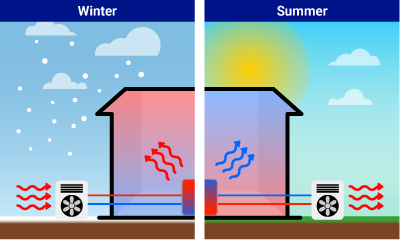
An ASHP provides both heating and cooling, extracting heat from outside and bringing it into the home during winter, and pulling heat out of the home during summer. They work similarly to a central A/C, except that an ASHP works in reverse to provide heating as well. Many new ENERGY STAR certified ASHPs excel at winter heating, even in cold climates.
Central A/C
Central A/Cs use ducts to draw in warm air, cool the air, and send the cool air through the home. They’re typically used alongside a furnace that provides heat during the winter.
ENERGY STAR certified cooling equipment uses 25% less energy than conventional models. While ENERGY STAR recently ended their Central A/C certification program, efficient new models can still help you achieve cost-effective comfort. Plus, receive a rebate up to $175 or up to $275 if you qualify for income-based enhanced rebates.
Air-source heat pumps
If you already have air ducts in your home, an ENERGY STAR certified air-source heat pump (ASHP) may be a good choice. You can also receive a rebate up to $325 or up to $475 if you qualify for income-based enhanced rebates.
An ASHP provides both heating and cooling, extracting heat from outside and bringing it into the home during winter, and pulling heat out of the home during summer. They work similarly to a central A/C, except that an ASHP works in reverse to provide heating as well. Many new ENERGY STAR certified ASHPs excel at winter heating, even in cold climates.
Central A/C
Central A/Cs use ducts to draw in warm air, cool the air, and send the cool air through the home. They’re typically used alongside a furnace that provides heat during the winter.
ENERGY STAR certified cooling equipment uses 25% less energy than conventional models. While ENERGY STAR recently ended their Central A/C certification program, efficient new models can still help you achieve cost-effective comfort. Plus, receive a rebate up to $175 or up to $275 if you qualify for income-based enhanced rebates.
Equipment that doesn’t require a duct system
Mini-split heat pumps
Mini-split heat pumps, sometimes called ductless heat pumps, provide both heating and cooling and can replace radiators, baseboard heating and window A/C units. They’re a good solution for older homes that don’t have ducts installed. Plus, receive a rebate up to $225 or up to $350 if you qualify for income-based enhanced rebates on a ductless mini-split heat pump.
A head unit (or multiple head units) are mounted on an interior wall or ceiling, with an accompanying unit outside. The outside unit extracts heat from the air, even when it’s cold. Refrigerant carries the heat directly to the head(s) inside and delivers heated air to the home. In warmer months, the system works in reverse for quiet, efficient air conditioning. Because they transfer heat instead of generating it, ENERGY STAR certified mini-split heat pumps use up to 60% less energy than standard home electric radiators.
Room A/Cs
Room A/Cs are often used when the home does not have a central system or when some areas need additional cooling. Another common use is for additions that aren’t connected to a central HVAC system. Receive an an instant discount on our online marketplace or a rebate up to $15 on a room A/C. ENERGY STAR certified room A/Cs use 10% less energy than standard units. To minimize energy costs, use ENERGY STAR’s Room A/C Buying Guide to find the correct unit for your room size.
Window heat pumps
Like room A/Cs, window heat pumps are a great solution for homes or a single area without ductwork, offering highly efficient heating and cooling for a room. They’re also easier to install when compared with a mini-split heat pump.
Mini-split heat pumps
Mini-split heat pumps, sometimes called ductless heat pumps, provide both heating and cooling and can replace radiators, baseboard heating and window A/C units. They’re a good solution for older homes that don’t have ducts installed. Plus, receive a rebate up to $225 or up to $350 if you qualify for income-based enhanced rebates on a ductless mini-split heat pump.
A head unit (or multiple head units) are mounted on an interior wall or ceiling, with an accompanying unit outside. The outside unit extracts heat from the air, even when it’s cold. Refrigerant carries the heat directly to the head(s) inside and delivers heated air to the home. In warmer months, the system works in reverse for quiet, efficient air conditioning. Because they transfer heat instead of generating it, ENERGY STAR certified mini-split heat pumps use up to 60% less energy than standard home electric radiators.
Room A/Cs
Room A/Cs are often used when the home does not have a central system or when some areas need additional cooling. Another common use is for additions that aren’t connected to a central HVAC system. Receive an an instant discount on our online marketplace or a rebate up to $15 on a room A/C. ENERGY STAR certified room A/Cs use 10% less energy than standard units. To minimize energy costs, use ENERGY STAR’s Room A/C Buying Guide to find the correct unit for your room size.
Window heat pumps
Like room A/Cs, window heat pumps are a great solution for homes or a single area without ductwork, offering highly efficient heating and cooling for a room. They’re also easier to install when compared with a mini-split heat pump.
Find HVAC equipment discounts and rebates.
- Air-Source Heat Pumps (Rebate)
- Central A/C (Rebate)
- Mini-Split Heat Pumps (Rebate)
- Room A/Cs (Online Marketplace | Rebate)
Receive discounts and rebates on additional products to efficiently keep your home comfortable:
- Air Sealing (Online Marketplace | Rebate)
- Attic Insulation (Rebate)
- Basement Wall Insulation (Rebate)
- Exterior Wall Insulation (Rebate)
- Rim Joist Insulation (Rebate)
- Smart Thermostats (Online Marketplace | Rebate)
Looking for professional input or installation service? Find a contractor.
Conditions for healthier indoor air quality
Keeping your home at optimal humidity, temperature and air quality can prevent mold, mildew and other contaminants that put your health at risk. We offer rebates to make the right equipment more affordable.
With the right equipment in your home, finding that balance is easy. Here are a few tips to help.
Air quality tips
Use an air purifier. Room air purifiers are portable, electric appliances that remove fine particles like dust and pollen from indoor air. ENERGY STAR air purifiers are 25% more energy efficient than standard models.
Change your air filters regularly. A dirty filter reduces air flow and makes the system work harder — which uses more energy. Regularly changing your HVAC system’s air filter can control dust and dirt buildup in your system. ENERGY STAR recommends checking your filter monthly during seasons of heavy use and changing the filter at least every three months.
Consider the MERV (Minimum Efficiency Reporting Values). Know the MERV rating for your air filter, which is how well it captures dust and other particles. ENERGY STAR recommends an air filter with at least a MERV 6 rating. If you have pets or other air quality concerns, consider using a filter with a higher rating and consult your equipment manual or an HVAC professional, since the highest MERV ratings reduce airflow.
Humidity tips
The ideal humidity level for a building is between 30% and 50%. Anything above this range may promote bacteria growth. Luckily, most dehumidifiers and smart thermostats monitor and display indoor humidity levels. Refer to the chart below for the recommended dehumidifier capacity.
| Condition without dehumidification |
Recommended capacity range, pints per day |
|
|---|---|---|
|
Small-medium space (<2,000 sq. ft.) |
Large space (>2,000 sq. ft.) |
|
| Slightly to moderately damp: space feels damp and has musty odor that may be intermittent. 50%-75% relative humidity. | 20-30 | 30+ |
| Very Damp: Space consistently feels and smells damp. Damp spots appear on walls and floors. 75%-90% relative humidity. | 25-40 | 40+ |
| Wet: Walls or floor sweat, or seepage is present. High-load conditions such as laundry drying may be present. 90%-100% relative humidity. | 30-50 | 50+ |